
 by
by 
The Do’s & Don’ts of Visiting a Builder Community Without Your REALTOR®
You see the flags: MODEL HOMES OPEN. Before you pull in “just to look,” know this: visiting a builder without your Realtor can quietly cost you representation, broker compensation and negotiating leverage, even if you’re not buying today.
Perhaps you already have a REALTOR®. Or you only want to see the floor plans. Either way, here’s the one thing I want every new-construction buyer in Texas to know:
Contact your REALTOR® before you visit the builder. Not afterward. Not once you find the house you love. Before.
That 30-second text can decide whether the builder recognizes your agent, whether broker compensation is available, how much leverage you keep at the negotiating table and whether someone is on your side from the first visit through the build and closing.
Why Visiting a Builder Without Your Realtor Is Risky
Builders spend serious money attracting buyers through signage, websites, digital ads, online leads and onsite sales teams. As a result, they set their own rules for deciding whether a buyer came through a REALTOR® or came to them directly.
Some of those rules are strict. For example, KB Home’s broker co-op terms require the buyer’s agent to either accompany the client on the first visit or register the client by phone with the community’s KB representative before that visit, and to confirm that a written buyer-broker agreement has been signed. Similarly, Beazer Homes asks agents to accompany and register their buyers on the first visit to a community. Chesmar Homes also states that buyers working with an agent must have that agent accompany and register them on the first visit.
Other builders handle it differently. In fact, there’s no universal rule, which is exactly why I want to hear from you first.
That’s also why this line is risky:
“I’ll just tell them Kory is my REALTOR® later.”
Sometimes that works, and sometimes it doesn’t. After all, the builder’s policy decides, not good intentions. In other words, visiting a builder without your Realtor and hoping to add me afterward is a gamble.
The #1 Rule: Text Me Before You Go
If you’re working with Kory White Real Estate Group and a community catches your eye, just send me:
- Builder name
- Community name
- City
- When you’d like to visit
That’s it. From there, I’ll handle the details, which can include:
- Confirming the builder’s REALTOR® registration policy
- Registering you with the builder
- Contacting the onsite sales representative
- Scheduling your appointment
- Verifying how buyer-agent compensation is handled
- Reviewing current builder incentives
- Documenting your representation
- Going with you when the builder requires agent attendance
What “Before the Visit” Really Means
“Before the visit” also means before you:
- Walk into a model home
- Book a tour online
- Fill out a builder contact form
- Scan a QR code on a community sign
- Attend a builder event
- Give a salesperson your name, phone or email
- Start talking about financing
Driving past a community on a Saturday afternoon and want to stop? Text me from the parking lot. Because it’s far easier to set things up correctly before registration than to fix them afterward, a quick message now saves real headaches later.
👉 Search New Construction and Homes for Sale
Quick Reference: Do’s & Don’ts When Visiting a Builder Without Your Realtor
| DO | DON’T |
|---|---|
| Text your REALTOR® before visiting | Register yourself as “No Agent” |
| Say you’re working with a REALTOR® right away | Share your maximum approval amount |
| Ask about costs beyond the base price | Apply with the builder’s lender on the spot |
| Compare multiple builders and resale homes | Hand over a preapproval letter without a plan |
| Have someone on your side during the build | Assume “new” means “better deal” |

DON’T Confuse the Builder’s Sales Rep With Your Representation
Let me be clear: builder sales reps are often great people. Many are knowledgeable, friendly and genuinely helpful. In fact, they know the floor plans, inventory, lots, design options, construction timelines, promotions and preferred lenders better than anyone.
However, they are employees of the builder. The builder signs their paycheck, and their agreement is with the builder. On top of that, the job is to sell the builder’s homes on the builder’s terms, so their interest is their boss.
My agreement, on the other hand, is with you. And my interest is you.
That’s not a knock on sales reps. It’s simply how the roles work:
| Builder Sales Rep | Your REALTOR® |
|---|---|
| Employed by the builder | Works under a written agreement with you |
| Represents the builder’s interests | Represents your interests |
| Sells that builder’s homes | Compares builders, communities and resale |
| Promotes that builder’s incentives and lender | Compares incentives and financing across options |
| Presents the builder’s contract | Reviews the contract from your side |
Think of it this way: you wouldn’t ask the other team’s coach to call your plays.
What Happens When You’re Visiting a Builder Without Your Realtor?
Walking into a builder’s sales office without representation means you’re the only person in the room looking out for you. In practice, that can mean:
- No one negotiating for you. The builder has a sales team, a sales manager and a pricing strategy. You, meanwhile, have yourself.
- A contract written for the builder. Builder contracts are typically drafted by the builder’s side and often differ from the TREC-promulgated New Home Contract and standard resale contracts. Therefore, deadlines, deposits, change orders, construction delays and warranty terms deserve a careful review from your perspective.
- Incentives without context. You may hear about the builder’s promotion but not how it compares with other builders, outside financing or nearby resale homes.
- Financing steered in one direction. The builder’s preferred lender may be a great fit, or it may not. Without someone comparing the numbers, though, it’s hard to know.
- Missed costs. Lot premiums, design-center upgrades, taxes, MUD/PID assessments and HOA dues can change your monthly payment dramatically.
- Losing the option to bring in an agent later. Depending on the builder’s registration policy, once you register on your own, you may not be able to add representation afterward.
- No one on your side during construction. Tracking the build, coordinating inspections, documenting issues and managing the punch list all fall on you.
That’s the real cost of visiting a builder without your Realtor. The builder is fully represented in every new-construction sale, so the question is whether you are too.
DON’T Tell the Builder Your Maximum Approval Amount
This is one of my biggest rules.
Say you’re approved for up to $500,000, and the home you like is $425,000. In that case, the builder doesn’t need to hear, “We’re approved for $500,000.” Here’s why:
- What you can spend and what you should spend are different numbers. Your approval ceiling isn’t your shopping budget.
- It hands the other side negotiating information. Once they know your ceiling, it’s harder to hold the line on price, upgrades or incentives.
Instead, the conversation I want to have with you is, “What house makes sense for you financially?” rather than, “How much can we get you approved for?”
If you haven’t been pre-approved yet, start with why mortgage pre-approval is one of the most important steps in buying a home. The Consumer Financial Protection Bureau’s Owning a Home resources are also a helpful, neutral starting point.
DON’T Hand Over Your Preapproval Letter Without a Strategy
A preapproval shows you’re serious, and that’s valuable. However, proving you qualify is different from advertising how high you can go.
- Home price: $390,000
- Maximum approval: $500,000
In that scenario, there’s rarely a strategic reason for a builder to receive a letter announcing a $500,000 ceiling on a $390,000 home. Instead, your lender and I can coordinate documentation that fits the specific property, so you prove you can close without revealing your full buying power. This matters even more when you’re visiting a builder without your Realtor, because no one is there to steer the conversation.
DON’T Say “We Can Spend Up To…”
This goes beyond the approval letter. On the tour, watch for casual comments like:
- “We could go another $50,000.”
- “Our max payment is $3,500.”
- “There’s another $40,000 in savings.”
- “We absolutely have to live in this community.”
- “This is definitely the one.”
Tell me all of that, because it helps me understand your options. Just don’t volunteer it to the other side.
Of course, loving the house is fine. We simply stay disciplined while we work the numbers. <!– IMAGE PLACEMENT 2: Buyers in a model home kitchen talking with a builder sales representative. Alt text: Homebuyers visiting a builder model home kitchen in Texas –>
DON’T Apply With the Builder’s Lender Just Because You Walked In
Builder lenders aren’t bad. In fact, preferred and affiliated lenders can offer real value, such as:
- Closing-cost assistance
- Interest-rate incentives
- Temporary or permanent rate buydowns
- Credits and other financing promotions
Still, incentives change, eligibility has conditions, and loan terms need to be compared as a whole. Before applying during your first visit, let’s find out:
- What the builder is offering
- Which conditions come with the incentive
- Whether the builder’s lender is required to get it
- The actual rate and APR
- Your closing costs
- Estimated monthly payment
- How it compares with outside financing
The builder’s lender can absolutely be part of that comparison. I just don’t want you locked into a financing decision before we’ve seen the numbers side by side. For a primer on your options, see types of mortgage loans.
📘 Download the Texas Home Buyer’s Guide
DO Tell the Builder You’re Working With a REALTOR®
If you end up in a sales office before reaching me, make your representation clear immediately. Here’s exactly what to say:
“I’m working with Kory White of Kory White Real Estate Group. I need to contact him before I register or move forward.”
Then text or call me. If you do end up visiting a builder without your Realtor, those two sentences are your safety net.
Don’t assume mentioning my name after you’ve finished the builder’s paperwork will satisfy their registration requirements. Instead, representation needs to be established before the process gets too far.
DON’T Register Yourself as “No Agent”
If a form asks, “Are you working with a REALTOR®?” and you’re working with me, the answer is yes, even if I’m not standing next to you.
Also, please don’t guess at my brokerage or contact information. Contact me, and I’ll help complete it correctly.
Texas Buyers: Written Representation Agreements Are Now Required
Texas law changed on January 1, 2026. Under the updated Real Estate License Act, a Texas license holder working with a prospective residential buyer generally must have a written agreement with that buyer before showing residential property, or before presenting an offer if no showing occurs. TREC explains the details, including limited non-representation showings, in What Changes in 2026 About Buyer/Tenant Representation in Texas.
The agreement covers services, representation and broker compensation. In addition, TREC requires disclosure that broker compensation is not set by law and is negotiable, and Texas agents must provide the Information About Brokerage Services notice. For a plain-English overview, NAR’s consumer guide to written buyer agreements is also worth a read.
As a result, the representation conversation should happen before you tour. It also gives us the chance to walk through exactly how it all works before you ever step into a sales center. For the full breakdown, read How Buyer Agent Compensation Works in Texas.
Can the Builder Pay My REALTOR®?
Potentially, yes. Many builders offer cooperating broker compensation. Even so, never assume a specific builder, community, home or promotion offers a specific amount, since TREC states that fees are determined by agreement between the parties.
That’s another reason I contact the builder before we tour. Specifically, I want to know:
- Whether broker compensation is offered, and how much
- The builder’s registration requirements
- If I must attend the first visit
- Required paperwork
- Any deadlines or exclusions
Then I’ll explain how it fits with your buyer representation agreement.
Will Bringing a REALTOR® Cost Me the Builder’s Deal?
A common worry: “If I bring my agent, will the builder charge me more?”
The builder’s published price and its broker-compensation arrangement are separate issues. Ultimately, what matters is the entire transaction:
- Purchase price
- Builder incentives
- Financing, rate and closing costs
- Upgrades and lot premiums
- Property taxes and HOA dues
- MUD or PID assessments, when applicable
- Insurance
- Buyer-agent compensation
- Estimated monthly payment
A flashy incentive isn’t automatically the best deal. Likewise, the lowest advertised rate doesn’t automatically mean the lowest total cost. That’s why we look at the whole picture.
DO Let Your REALTOR® Compare Builders
You might love Builder A’s kitchen. Builder B, however, might offer a better location, a better lot, a lower tax rate, lower HOA dues, more included features or a lower monthly payment. Meanwhile, Builder C might have a quick move-in home that changes everything.
My job isn’t just to show you a model home. Rather, it’s to help you understand the home, the numbers, the market and the deal. When you’re visiting a builder without your Realtor, you only ever hear one builder’s side of that comparison.
If you’re shopping the Houston area, start with my guide to home builders in Houston, Texas. For a real-world example of comparing builders, taxes and MUD/PID costs in one community, see Living in Crandall, TX.
Price. Location. Build Type. Pick Two.
I tell buyers to weigh three things, although most eventually have to prioritize two.
- Location + new construction? Be ready to stretch on price.
- Lower price + new construction? Expect to move farther out.
- Your price + your location? A resale home may make more sense.
There’s no wrong answer, only the combination that fits you best.
DON’T Assume New Construction Is Automatically the Better Deal
New can be great. However, new doesn’t automatically mean less expensive, lower payment, better financing, lower taxes, lower insurance, zero maintenance or stronger resale value. Similarly, resale doesn’t automatically mean the opposite.
For that reason, I often compare new construction and resale side by side before deciding which is better.
DO Ask About Costs Beyond the Base Price
The price on the builder’s website is only the starting point. Depending on the community, we may need to account for:
- Lot premiums and structural options
- Design-center selections
- Appliances, blinds, gutters, fencing and landscaping
- Garage-door openers
- HOA dues
- Property taxes, MUD and PID assessments
- Homeowners insurance
- Closing and financing costs
For example, a $399,000 home isn’t automatically cheaper month to month than a $415,000 home, because the payment and total cost are what count. For a deeper look, read The Hidden Costs of Buying a Home in Texas.
Representation Matters Most During the Build
Signing the contract isn’t the finish line. In fact, for new construction, it’s often the starting line.
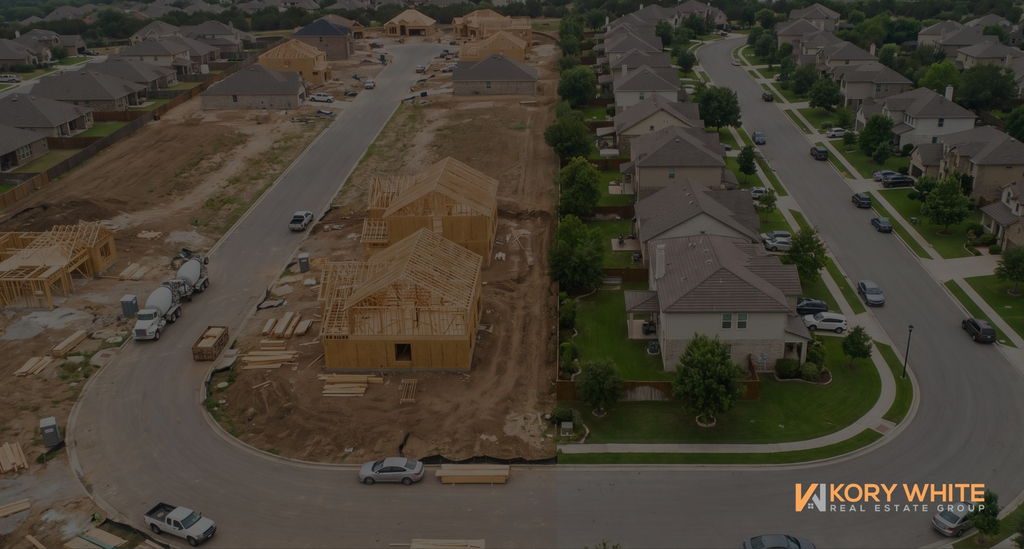
Your home may take months to build, with dozens of subcontractors and trades rotating through: framers, plumbers, electricians, HVAC techs, roofers, drywall crews, painters and finishers. As a result, mistakes happen, even with great builders.
The builder has a construction manager overseeing the build. That person is also an employee of the builder, and the job is to keep the builder’s schedule and budget on track. You, on the other hand, need someone on your side making sure things are done right.
How I Help During Construction
During the build process, I help you:
- Track construction progress and stay in communication with the builder so you’re not left guessing
- Confirm your selections match your contract, including design-center choices, upgrades, options and change orders
- Coordinate independent inspections at key stages, such as foundation, pre-drywall and final
- Document issues in writing and follow up with the builder until they’re addressed
- Watch deadlines tied to your contract, financing, rate locks and incentives
- Attend walkthroughs, including the pre-drywall walk and final orientation
- Build and follow up on the punch list before closing
- Make sure repairs are completed before you sign, not “after closing”
- Understand the builder warranty and how to submit claims after move-in
Why Independent Inspections Matter
A new house is still a house, and builder warranties are not a substitute for catching problems before closing. Depending on the builder’s process, inspections may include:
- Pre-drywall inspection: The best chance to see framing, plumbing, electrical and HVAC before walls are closed up. Once drywall goes up, many issues become harder and more expensive to find.
- Final inspection: A top-to-bottom review before closing to build your punch list.
- Follow-up inspection: Confirms punch-list items were actually corrected.
- 11-month warranty inspection: Catches issues before your one-year builder warranty period ends.
Some builders have specific rules about inspector access, scheduling and timing. That’s why I confirm those requirements up front, so your inspections actually happen.
What Happens Without Someone Watching the Build?
- Wrong selections or missed upgrades discovered at the final walkthrough
- Pre-drywall stage passes before anyone inspects it
- Punch-list items left unfinished at closing
- Change orders approved without clear pricing or documentation
- Warranty deadlines missed
The builder has a team managing its interests through every stage of construction. You deserve someone managing yours. Unfortunately, visiting a builder without your Realtor on day one often means building without one, too.
📅 Schedule a Free 15-Minute Consultation
Your New-Construction Game Plan
- Contact me before visiting.
- Tell me which builder and community interest you.
- Let me verify the builder’s registration requirements.
- Complete your buyer representation agreement.
- Allow me to schedule or register the visit correctly.
- Tour the community.
- Keep your maximum approval amount to yourself.
- Hold off on a builder-lender application.
- Compare builder financing and incentives with your alternatives.
- Weigh the home, price, taxes, fees, incentives and monthly payment.
- Review the contract and deadlines carefully.
- Track the build, confirm selections and document issues with the builder.
- Coordinate pre-drywall, final and 11-month inspections, walkthroughs, punch list, financing and closing.
Altogether, that puts you in a far stronger position than untangling things after registering on your own. For the bigger picture, see Buying a Home in Texas: The Complete Guide.

Already Visiting a Builder Without Your Realtor? Call Me Anyway
Don’t assume it’s too late, because builder policies vary. Even if you’ve been visiting a builder without your Realtor for weeks, there may still be options. Just tell me:
- Builder and community
- When you visited
- What information you gave them
- If you registered, and whether you mentioned having an agent
- Anything you signed
- Any financing application or incentive quote you received
After that, I’ll contact the builder and find out where things stand. The sooner, the better.
📅 Schedule a Free 15-Minute Consultation
FAQs About Visiting a Builder Without Your Realtor
Can I tour a model home without my REALTOR®? You can physically visit many communities on your own. However, visiting a builder without your Realtor can affect registration, because some builders require the buyer’s agent to accompany or register the buyer before the first visit to qualify under their broker cooperation policies. Contact your agent first.
Should I tell the builder I already have a REALTOR®? Yes. Make it clear before completing any registration paperwork.
Should I register online before visiting a new-home community? Contact your REALTOR® first. Online registration can create a lead record with the builder, so let your agent check the policy and coordinate registration.
What if the builder asks how much I’m approved for? You don’t need to disclose your maximum buying power. Instead, your REALTOR® and lender can decide what proof of qualification fits the home you’re considering.
Should I give the builder my preapproval letter? The builder may need evidence you can close. That doesn’t mean sharing a letter showing far more buying power than needed, so coordinate with your REALTOR® and lender.
Should I apply with the builder’s lender? You might, and their incentives are worth evaluating. First, though, compare the rate, APR, lender fees, credits, closing costs and monthly payment.
Does the builder’s salesperson represent me? No. Builder sales reps are employees of the builder, and their agreement and interest are with the builder. By contrast, your buyer’s agent works under a written agreement with you and represents your interests.
What’s the risk of visiting a builder without your Realtor? The builder is represented in every sale. Without your own agent, no one is negotiating, reviewing the builder’s contract, comparing incentives and financing, or watching the build on your behalf. In addition, some builders won’t let you add an agent after you register.
What does my REALTOR® do while my home is being built? Your REALTOR® helps track construction progress, confirm selections match your contract, coordinate independent inspections, document issues with the builder, manage the punch list and make sure repairs are completed before closing.
Does using a REALTOR® cost me the builder incentive? Not automatically. Because incentives and broker compensation policies vary, your REALTOR® should verify current terms for the specific community and home.
Can I add my REALTOR® after I’ve already registered? Sometimes. Some builders allow it, while others restrict it. Since there’s no universal rule, contact your REALTOR® immediately.
Why should my REALTOR® go with me to new construction? Your agent can help evaluate registration, contracts, incentives, financing, taxes, fees, inspections, walkthroughs and negotiations, and stay on your side through the build and closing.
Before You Visit Your Next Model Home
If you remember one thing from this article, make it this: text me before you go. That applies when you’re “just looking,” when you’re not buying today and when the model home is right around the corner.
The builder’s team works for the builder. I, however, work for you, from the first visit through the final walkthrough.
Send me the builder and community, and I’ll set it up correctly before you walk through the door. Once we’re there, keep your maximum approval to yourself and don’t feel pressured to apply for financing on the spot.
First the house, then the numbers. Next come the incentives and the deal. Finally, the build, done right.
👉 Search Homes for Sale | Homes for Lease
📘 Download the Texas Home Buyer’s Guide
📅 Schedule a Free 15-Minute Consultation
About Kory White Real Estate Group
Kory White Real Estate Group helps buyers, sellers, investors and relocating clients throughout Texas, including Dallas-Fort Worth, Greater Houston, Austin, San Antonio and surrounding communities.
We work with resale homes, new construction, first-time buyers, relocation, investments, luxury properties and leasing, and we help every client understand the home, the numbers, the market and the deal.
Dallas: 469-336-3027 Houston: 281-738-4446 Website: korywhiterealestategroup.com


Join The Discussion